
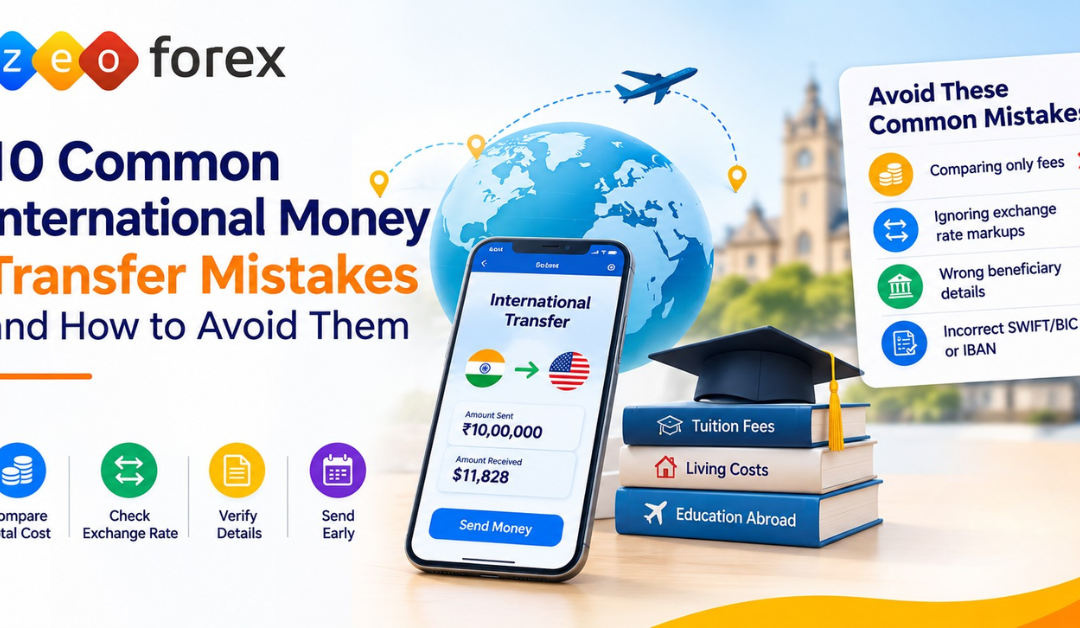
Quick Answer: What Are the Most Common International Money Transfer Mistakes?
The most common international money transfer mistakes include comparing only transfer fees, ignoring exchange-rate markups, entering wrong beneficiary details, using an incorrect SWIFT/BIC or IBAN, choosing the wrong currency and sending too close to a deadline. To avoid them, verify official payment instructions, compare the total cost, prepare the right documents and keep your transaction confirmation.
Introduction
Paying overseas tuition, rent or living costs involves far more than typing an amount and clicking send. Picture a parent arranging a university fee payment two days before the deadline, only to realise the student ID was left out of the reference. Small slips like that can cause delays, extra charges or a lot of stress.
This guide walks through the mistakes to avoid when sending money abroad and what to do if something goes wrong. For a broader overview, see our international money transfer guide.
Why Small International Money Transfer Mistakes Can Be Costly
A single wrong digit or an overlooked fee can have a bigger impact than you'd expect. Common money transfer mistakes can lead to:
- Unexpected charges and a gap between what you sent and what arrived
- Payments that are delayed, rejected, returned or sent to the wrong account
- Missed university payment deadlines
- Extra time lost to compliance reviews or intermediary bank processing
It's also worth knowing that a payment being processed is not the same as a university applying it to a student's account. Funds can reach the receiving bank and still sit unmatched if key details are missing. Not every mistake causes all of these problems, but each one raises the risk of international transfer delays.
10 Common Mistakes When Sending Money Abroad
1. Not Comparing the Total Transfer Cost: The advertised fee is only part of the story. The real cost of an international money transfer also depends on the exchange rate and any other charges along the way. When you compare providers, use the same sending amount and currency, then look at the expected amount the recipient will actually receive.
Here is a hypothetical comparison for sending ₹10,00,000 to a US account:
| Item | Quote A | Quote B |
|---|---|---|
| Transfer fee | ₹500 | ₹0 |
| Exchange rate offered | ₹84.50 per USD | ₹85.40 per USD |
| Approximate amount received | $11,828 | $11,710 |
These figures are illustrative only and are not live rates.
Quote B looks cheaper because it has no fee. Quote A still delivers roughly $118 more. Read more on the cheapest way to send money abroad.
2. Ignoring Exchange-Rate Markups: Many providers offer a rate that differs from the reference or mid-market rate. That difference is the exchange rate markup on an international transfer, and it can quietly add up.
On a large tuition payment even a small markup matters. A markup of ₹1 per USD on a $20,000 fee adds about ₹20,000 to your cost. That holds even if the provider advertises low or zero transfer fees. Always check the rate you're actually being offered rather than focusing only on the fee.
3. Entering Incorrect Beneficiary Details: Misspelled names, wrong account numbers and outdated recipient details are some of the most frustrating errors. Incorrect beneficiary details on an international transfer can lead to rejection, delay, a returned payment or funds landing in the wrong account.
Money sent to the wrong account cannot always be recovered. Confirm every detail against the official payment instructions. If anything looks unfamiliar, double-check it through a trusted channel such as the university's official website or a known contact before you send.
4. Using the Wrong SWIFT/BIC or IBAN: A SWIFT/BIC code identifies the receiving bank. An IBAN is an international account-number format used in participating countries, mainly across Europe and parts of the Middle East. Some destinations use other local identifiers instead, such as routing numbers in the US or BSB codes in Australia.
A wrong SWIFT code on an international transfer can send your payment down the wrong route, causing delays or a return. Verify the required identifiers directly with the receiving bank or the beneficiary's official instructions. You can learn more about how SWIFT transfers work.
5. Choosing the Wrong Transfer Currency: Paying in a different currency from the one the recipient requires can cause extra conversion and mismatched amounts. For example, a university invoice might ask for AUD, but the sender picks USD without checking whether that's accepted. The university's bank may then convert the funds and the amount received may fall short of the invoice.
Before sending, check the invoice, the supported payment route and the required settlement currency.
6. Sending Money Too Close to a Deadline: If you've ever wondered why international money transfers get delayed, timing is often the answer. Bank cut-off times, public holidays in either country, intermediary processing, verification steps and compliance checks can all slow a payment down.
Tuition fee transfer delays are especially stressful when an enrolment or visa step depends on payment. Confirm the university's deadline, allow a sensible processing buffer and monitor the transfer after sending. No provider can promise an exact settlement time for every route. Check typical international transfer processing times before you plan.
7. Overlooking Intermediary or Receiving-Bank Charges: Some international payments pass through correspondent or intermediary banks before reaching the beneficiary. Each one may deduct a fee, which is one source of hidden fees in an international money transfer.
You may see three charge options:
- OUR: The sender pays all charges.
- SHA: Charges are shared between sender and recipient.
- BEN: The recipient pays all charges.
Fee arrangements and final deductions still vary by bank and route. For tuition payments, ask whether the university expects the full invoice amount to arrive. See our guide to international transfer charges for more detail.
8. Submitting Incomplete or Incorrect Documentation: Authorised payment providers may ask for identity details, information about the purpose of the remittance and supporting documents. Missing or incorrect paperwork is a common reason transfers are held up.
For education payments, this could include a university invoice, an admission letter or other evidence your authorised dealer requests. Requirements differ between providers and can change, so check current RBI guidance and your provider's actual list rather than relying on a generic checklist. Our article on documents required for outward remittance covers this in more depth.
9. Using an Incorrect Payment Purpose or Reference: These are two separate fields and both matter:
- Remittance purpose: Why the money is being sent, using the correct classification under applicable Indian rules (see the RBI Liberalised Remittance Scheme FAQs). This is often called the purpose code for outward remittance.
- Payment reference: The detail the recipient uses to identify and allocate the payment, such as a student ID or invoice number.
One of the most common mistakes when paying tuition fees abroad is leaving out the student reference. Follow your authorised dealer's current purpose-code guidance and the university's official payment instructions.
10. Failing to Verify the Provider or Payment Instructions: Using an authorised payment channel is one safeguard. Making sure the beneficiary instructions are genuine is another.
Be cautious of changed account details, urgent payment requests and messages that seem slightly off. Fraudsters sometimes impersonate universities, agents or landlords. If you receive unexpected new bank details, verify them independently through a contact method you already trust before sending any money. If you suspect fraud, report it on India’s National Cyber Crime Reporting Portal or call the 1930 helpline.
Mistakes to Avoid When Paying Overseas Tuition Fees
Overseas education remittance comes with its own set of details. Here is what to watch for.
Verify the University's Official Payment Instructions: Confirm the approved beneficiary name, payment currency, invoice amount, permitted payment routes and the student reference the university wants included.
Allow Time for Payment Processing and Allocation: A tuition payment usually moves through three stages:
| Stage | What it means |
|---|---|
| Initiated | You or your provider has sent the payment |
| Received | The funds have reached the university's bank |
| Allocated | The university has matched the payment to the student's account |
A payment confirmation from your provider doesn't always mean the university has matched the funds to the student.
Retain Payment Proof and Confirm the Student Account: Keep your transaction reference and confirmation. Follow the university's process for checking that the payment has been allocated.
Hypothetical example: A student's tuition payment arrives at the receiving bank but isn't matched to their student record because the invoice reference was left out. The student then has to contact the finance office with proof of payment, which takes extra time near the deadline.
For a full walkthrough, read our guide to paying overseas tuition fees.
International Money Transfer Checklist Before You Send
Run through this checklist before every transfer.
Recipient details:
- Confirm the beneficiary name and account details
- Check the SWIFT/BIC, IBAN or required local identifier
- Verify the invoice or student payment reference
Costs:
- Compare exchange rates and total transfer costs
- Check intermediary and receiving-bank fees
- Confirm the requested payment currency
Compliance:
- Select the correct remittance purpose
- Prepare the required documents
- Verify the provider and payment instructions
Timing:
- Check the payment deadline and allow processing time
- Save the transfer confirmation and reference
What to Do If You Make an International Transfer Mistake
If you think something has gone wrong, act quickly:
- Contact your sending bank or payment provider straight away.
- Share the transaction reference, date, amount and the suspected error.
- Ask whether a trace, amendment, cancellation, recall or return request is possible.
- Contact the recipient through a verified channel if appropriate.
- Keep a record of all correspondence, any charges and agreed next steps.
- Escalate through the provider's complaint process or official fraud-reporting channels if needed.
A recall request is not a guaranteed refund. The outcome depends on the payment's status, the route it took, the banks involved and the rules that apply. If you've sent an international money transfer to the wrong account, speed matters most. You can also learn how to track an international transfer.
How ZeoForex Supports Education-Related International Transfers
ZeoForex is an international remittance solution built for education and immigration consultants who coordinate overseas education payments for students and families.
It helps with the practical side of getting tuition and related payments right:
- Understanding quoted exchange rates and applicable transfer charges
- Coordinating tuition and other education payment requirements
- Preparing accurate beneficiary and payment information
- Facilitating applicable outward remittances from India through RBI-licensed partners
If you handle education payments for clients, explore ZeoForex for education-related international transfers.
Frequently Asked Questions About International Money Transfer Mistakes
What are the most common international money transfer mistakes? The most common mistakes are entering incorrect recipient details, comparing only fees instead of total cost, sending too close to a deadline and submitting incomplete documentation.
What happens if I enter the wrong account number? The payment may be rejected, delayed, returned or sent to the wrong account. Contact your provider immediately with the transaction details.
Can an international bank transfer be reversed? You can usually request a recall, but recovery is not guaranteed. It depends on whether the funds have been credited and how the receiving bank responds.
What happens if I use the wrong SWIFT code? The payment may be routed incorrectly, which can cause delays or a return to the sender. Some funds may also be lost to bank charges along the way.
Why do international money transfers get delayed? Delays often come from bank cut-off times, holidays, intermediary processing, missing details or compliance checks.
How can I avoid hidden fees when sending money abroad? Compare the expected amount the recipient will receive rather than the fee alone. Check the exchange rate and ask about intermediary or receiving-bank charges.
Conclusion: Avoid Mistakes Before Sending Money Overseas
Most international money transfer mistakes are avoidable with a little preparation. Verify recipient details, compare the full transfer cost, plan ahead, use accurate documents and keep your confirmation. If you're an education consultant, always check the university's payment instructions and references before coordinating a payment. When you're ready, ZeoForex can help you manage education-related transfers with confidence. You can also read more about sending money abroad from India.